Running Out of Time? Simple Everyday Anxiety Management
Over 8 million people in the UK live with some form of anxiety disorder[1], often characterised by physical symptoms such as a racing heart or shortness of breath, as well as feelings of being overwhelmed, fear, or worry, all of which can be debilitating.
Alarmingly chronic stress can in fact lower our life expectancy. Over time, permanently high cortisol levels (the ‘stress’ hormone) can weaken the immune system, shortening our life span and leading to other health conditions.
Yet finding a daily moment of calm doesn’t have to drain your bank account nor drain the hours out of your day.
Simple breathwork techniques for anxiety can offer an instant, inbuilt path to inner calm.
How does breathwork alleviate anxiety?
When we feel anxious, the body’s fight-or-flight response is triggered, leading to shallow breathing, increased heart rate, and heightened stress levels. Breathwork directly counteracts these effects by activating the parasympathetic nervous system, which promotes relaxation and reduces stress.
Here’s how breathwork helps manage anxiety:
- Breathwork reduces stress hormones: Breathwork lowers cortisol levels, ‘the stress’ hormone.
- Breathwork enhances mindfulness: Grounds you in the present moment, slowing the mind and reducing anxious thoughts.
- Breathwork improves oxygenation: Increases oxygen flow to the brain, enhancing mood and brain power.
- Breathwork balances the nervous system: Activates the parasympathetic nervous system which promotes relaxation.
Some Effective Breathwork Techniques for Anxiety
Belly Breathing
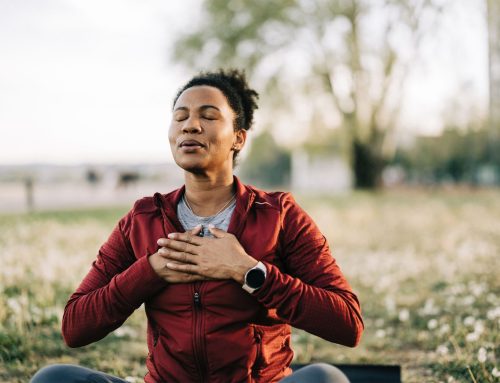
- How: Place one hand on your chest and the other on your abdomen. Breathe in gently through your nose, lengthening the breath, allowing your belly and chest to move outward. Exhale very slowly through your mouth as if exhaling through a straw.
- Benefits: Reduces stress, lowers heart rate, and promotes relaxation.
Box Breathing (Square Breathing)
- How: Inhale gently through the nose for a count of four, hold for a count of four, exhale gently through the nose for a count of four, and hold again for a count of four. Repeat.
- Benefits: Immediately calms the nervous system, reduces physical symptoms of anxiety, and improves focus.
Alternate Nostril Breathing (Nadi Shodhana)
- How: Close your right nostril with your thumb, inhale gently through your left nostril. Close your left nostril with your ring finger, and exhale through the right nostril. Inhale through the right nostril, then close it with your thumb and exhale through the left. Repeat.
- Benefits: Balances the left and right hemispheres of the brain, reduces stress, and enhances mental clarity.
Harmonious Breathing 4-7-8
- How to Do It: Inhale quietly through the nose for four counts, hold the breath for seven counts, and exhale gently through the nose or mouth for eight counts. Repeat the cycle up to four times.
- Benefits: Reduces anxiety, promotes relaxation, and helps with sleep issues.
Breathwork can be a transformative tool for everyday anxiety management. Whether you’re able to set aside 60 seconds or 60 minutes, dealing with mild anxiety or more severe symptoms, a consistent, daily practice is essential to reap the rewards of profound mind-body connection.
It’s also important to remember, while breathwork can be highly beneficial, it’s not a substitute for professional mental health treatment. Always consult with a mental health professional before starting any new anxiety management practice.
[1] Spill: https://www.spill.chat/mental-health-statistics/anxiety-statistics